Business Finance in Zambia (2026): The Ultimate Blueprint to Loans, Banking, Funding, and Compliance
Introduction
Access to finance is historically and practically one of the most significant hurdles facing businesses operating within Zambia. Whether you are a solo entrepreneur nurturing a disruptive tech startup in Lusaka, an established commercial farmer scaling production along the Mkushi farm blocks, or a seasoned logistics contractor servicing the Copperbelt mining corridors, understanding your financial options is the difference between operational stagnation and sustainable economic growth.
At ZamFinanceInfo, our mission is to break down the complexities of corporate finance into reliable, practical, and highly actionable insights. The Zambian economic landscape in 2026 is undergoing rapid structural transformations. Backed by strategic developments like the operational expansion of the Lobito Corridor, targeted fiscal policies from the Ministry of Small and Medium Enterprise Development, and an assertive push by the Bank of Zambia (BoZ) toward full interoperable digital banking, opportunities for capitalization are expanding. However, securing this capital requires deep financial literacy, strategic planning, and structural compliance. This exhaustive guide provides the exact blueprint required to navigate business loans, government grants, corporate banking setups, tax obligations, and financial management practices in Zambia.
Why Business Finance Matters
Many businesses fail not because their underlying products or services lack market demand, but because they run out of cash. Sound financial management and strategic capitalization act as the lifeblood of any commercial operation, offering several critical benefits:
- Access Capital for Scale and Growth: Businesses require external funding injections to unlock new product lines, build physical infrastructure, or execute long-term strategic plans that cash reserves from organic sales cannot cover immediately.
- Optimize Cash Flow Cycles: A business can be highly profitable on paper while remaining technically insolvent if its cash is tied up in unpaid invoices and inventory. Robust business finance structures provide the liquidity buffers needed to bridge these gaps.
- Acquire Modern Equipment and Assets: Moving away from manual, inefficient workflows requires capital expenditure (CapEx). Proper asset financing allows firms to purchase delivery trucks, processing plants, or manufacturing machinery without draining operational cash reserves.
- Attract and Retain Top-Tier Talent: Scaling operations requires onboarding skilled professionals. A stable financial foundation ensures your enterprise can comfortably sustain competitive monthly salaries, commissions, and employee benefits.
- Expand Dynamically Into New Markets: Establishing physical branches across different provincial hubs (such as Ndola, Livingstone, Chipata, or Solwezi) or entering cross-border trade requires substantial, flexible upfront capital deployment.
- Build Institutional Resilience Against Shifting Macroeconomic Conditions: Economic realities—such as currency fluctuations, inflationary pressures, or sudden monetary policy rate hikes by the central bank—can shock unsupported enterprises. A solid financial cushion shields your operations during these economic adjustments.
- Minimize Corporate Waste and Maximize Margins: Financial oversight pinpoints precise areas of revenue leakage, ensuring that variable production costs are rigorously managed against net profit yields.
- Establish Verifiable Corporate Equity Over Time: Maintaining clean financial records, auditable statements, and strategic debt repayment lines transforms a small business into a valuable corporate asset capable of attracting mergers, acquisitions, or global venture capital.
1. Business Loans: Navigating Corporate Debt Markets
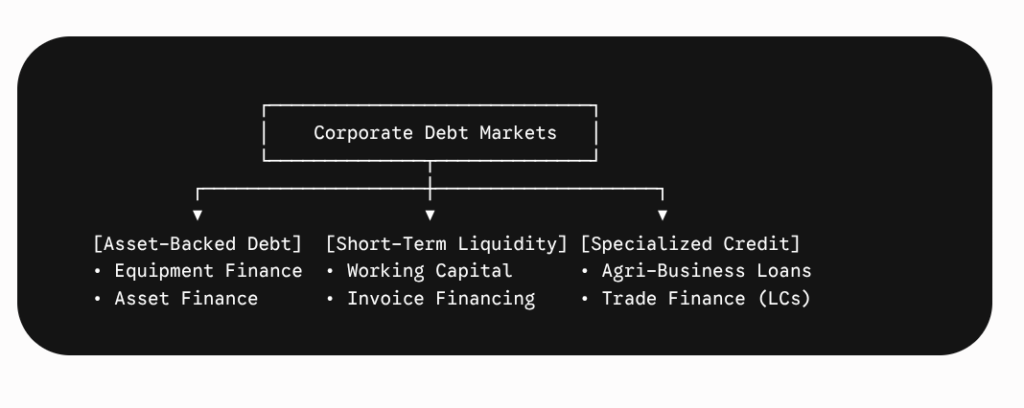
Debt financing is one of the most common ways to inject capital into an operating business. However, matching your specific operational need with the correct borrowing instrument is essential to avoid crushing interest burdens.
SME Loans vs. Startup Loans
The lending requirements for an established Small and Medium Enterprise (SME) differ completely from those of an early-stage startup.
- Startup Loans: True startups rarely qualify for traditional commercial bank loans because they lack historical cash flows and hard collateral. Funding for startups in Zambia is primarily driven by digital micro-lenders, angel networks, peer-to-peer credit platforms, and specialized public micro-credit facilities. These institutions place greater weight on the personal creditworthiness of the founders and the viability of the business model.
- SME Loans: Dedicated SME lending desks—offered by tier-one banks such as Zanaco, FNB, Absa, and Indo Zambia Bank—cater to businesses with at least one to three years of verified trading history. These facilities provide higher credit limits and extended repayment terms, using corporate turnover metrics to evaluate borrowing capacity.
Working Capital Loans
Working capital loans are short-term borrowing options designed explicitly to manage daily operational expenses, rather than funding long-term capital investments. If your business faces a cyclical cash crunch—such as needing to purchase raw inventory or meet payroll obligations while waiting for a major corporate client to clear a 60-day invoice—a working capital line provides the necessary liquidity buffer. Repayment schedules for these loans are typically short, ranging from 3 to 12 months, and are structured to align directly with your short-term cash inflows.
Equipment Financing & Asset Finance
If your enterprise needs to buy delivery vehicles, heavy industrial machinery, generators, or specialised computers, using a standard personal or business loan can be unnecessarily expensive. Asset and equipment financing allows the purchased item itself to serve as the primary security for the credit line.
- Hire Purchase Agreements: The lender purchases the asset on behalf of your business, and your company takes immediate operational possession. You pay monthly installments over a set period (typically 24 to 60 months). Once the final payment is cleared, legal ownership of the asset transfers completely to your enterprise.
- Finance Leases: Your business rents the equipment from the lender for a fixed duration. At the end of the lease lease term, you may have the option to purchase the asset at a highly reduced residual value, return it, or upgrade to a newer model. This structure keeps depreciating assets off your balance sheet while maximizing operational tax deductions.
Invoice Financing & Factoring
For contractors working with large mining houses, telecommunications companies, or public entities, payment delays are a common challenge. You deliver the service, receive a certified invoice, but face a 30 to 90-day wait for actual fund disbursement. Invoice Financing (also known as invoice discounting or factoring) resolves this issue by allowing you to submit your verified, unpaid invoice to a financial institution. The lender advances up to 70% to 80% of the invoice’s total cash value immediately, allowing you to sustain operational momentum. Once the client pays the full invoice value directly to the financial provider, the remaining balance is released to you, minus a pre-agreed processing fee or discount rate.
Trade Finance
For enterprises engaged in importing raw materials or exporting finished goods across international borders, trade finance instruments mitigate transaction risks between global buyers and sellers.
- Letters of Credit (LCs): A formal guarantee issued by your Zambian bank to an overseas exporter’s bank. It states that your business will pay a specified sum once the exporter provides verified proof that the goods have been shipped securely and according to contract specifications.
- Bank Guarantees & Performance Bonds: Legal commitments ensuring that if your company fails to fulfill a specific contractual obligation, the bank will financially compensate your client up to a specified limit. These are frequently mandatory when bidding for high-value engineering, procurement, and construction (EPC) contracts.
Agriculture Business Loans
Agriculture remains a cornerstone of the Zambian economy, but standard monthly loan repayment schedules do not match farming lifecycles. Specialized agricultural business loans offer structured repayment calendars that align directly with seasonal crop harvests or livestock marketing windows. Whether you need financing for center-pivot irrigation systems, bulk fertilizer purchases, seed stocks, or aquaculture infrastructure, lenders specializing in agri-finance structure bullet repayments or multi-month grace periods to shield your cash flow until your produce hits the market.
2. Business Banking: Structuring Your Corporate Financial Hub
Operating a modern business through a personal bank account is a major compliance risk that can hinder your long-term growth. Commercial banks provide dedicated corporate structures designed to separate personal assets from business finances, establish a formal institutional credit history, and streamline transactions.
Selecting the Right Corporate Banking Partner
When evaluating business banking desks, look beyond basic brand visibility. Compare specific service indicators:
| Commercial Bank Focus | Key Specializations & Strengths | Target Business Segment |
| Zanaco (Zambia National Commercial Bank) | Extensive branch and agent network across all provinces; deeply integrated local mobile wallet ecosystems. | Retailers, agricultural cooperatives, and widespread rural enterprises. |
| First National Bank (FNB) Zambia | Robust digital banking platforms; seamless integrations with international payment systems and advanced online accounting tools. | Tech startups, professional service consultancies, and digital enterprises. |
| Stanbic Bank Zambia | High-value corporate debt facilities; sophisticated trade finance desks and international corporate structuring. | Mining suppliers, large-scale manufacturers, and cross-border logistics firms. |
| Indo Zambia Bank | Dedicated MSME financing desks; highly competitive lending rates tailored for developing local businesses. | Market traders, light manufacturers, and expanding family-owned businesses. |
| Absa Bank Zambia | Strong regional African footprint; structured corporate cards and asset management portfolios. | Import-export operations and mid-tier commercial enterprises. |
Merchant Services & Point-of-Sale (POS) Integrations
Modern consumers rely heavily on digital payments, making physical cash handling an unnecessary security and operational risk.
- Traditional Mobile POS Terminals: Handheld payment devices deployed at your retail till points, allowing clients to swipe or tap Visa and Mastercard debit or credit cards.
- Interoperable QR and Mobile Money Hubs: Systems that consolidate payments from MTN Mobile Money, Airtel Money, and ZAMTEL Kwacha into a single corporate counter code or digital terminal.
- E-commerce Payment Gateways: Dedicated APIs integrated directly into your website or mobile app, allowing you to securely accept real-time payments from global customers via card or mobile wallets.
Corporate Credit & Debit Cards
Issuing structured corporate cards to business owners, directors, and trusted procurement managers simplifies expense tracking. These cards feature customizable daily spending caps and merchant category restrictions. They keep your primary business account secure while providing a clear digital ledger for fuel purchases, emergency travel expenses, utility payments, and online software subscriptions.
Foreign Currency Accounts (EEAs)
Given the fluctuations of the Zambian Kwacha against global currencies, businesses that import inventory or export goods should utilize Earned Equity Accounts (EEAs) or foreign currency accounts. Maintaining separate balances in US Dollars (USD), Euros (EUR), British Pounds (GBP), or South African Rand (ZAR) allows you to pay global suppliers directly without incurring costly currency conversion fees on every transaction. It also serves as a strategic hedge against local currency depreciation.
3. Alternative Business Funding Ecosystems
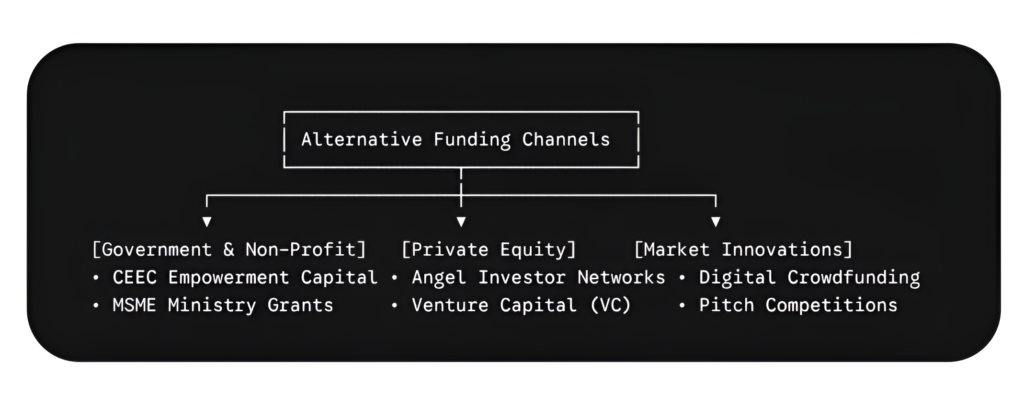
When high commercial bank interest rates or strict collateral demands make traditional debt financing unfeasible, alternative funding ecosystems offer alternative paths to secure essential capital.
Government Grants & Public Empowerment Programs
The Zambian government routinely deploys public capital to stimulate local production, particularly targeting women, youth, and rural initiatives.
- Citizens Economic Empowerment Commission (CEEC): A statutory body offering low-interest empowerment loans, asset rehabilitation grants, and business development funds to local enterprises.
- Ministry of Small and Medium Enterprise Development: Provides structured capacity-building grants, incubation support, and targeted financial facilities designed to transition informal market operators into the formal economy.
- CDF (Constituency Development Fund) Allocation: A portion of local CDF allocations is explicitly reserved as micro-grants and low-interest loans for community-based cooperatives, clubs, and local entrepreneurs.
Non-Governmental Organizations (NGOs) and Donor Funding
International development agencies (such as USAID, UKAid, the European Union, and the African Development Bank) routinely sponsor challenge funds and competitive grant frameworks within Zambia. These funding lines focus primarily on climate-smart agriculture, renewable energy solutions, off-grid electrification, public healthcare innovations, and women-led enterprises. While these grants provide non-repayable capital, they require rigorous financial reporting, strict transparency, and clear verification of social impact metrics.
Venture Capital & Angel Investor Networks
For high-growth enterprises—particularly those in fintech, agritech, logistics, and renewable energy—equity financing offers an alternative to traditional debt.
- Angel Investors: High-net-worth individuals who invest their personal capital into early-stage business models in exchange for equity or convertible debt.
- Venture Capital (VC) Firms: Institutional funds that pool capital to invest in scalable startups with proven early market traction. VC funding brings both capital and valuable global networks, strategic board guidance, and pathways to subsequent international funding rounds.
Crowdfunding & Competitive Pitch Structures
- Equity and Reward Crowdfunding: Utilizing specialized digital platforms to pitch your business model to thousands of micro-investors globally or locally, raising capital in exchange for early product access or small equity stakes.
- Business Plan Pitch Competitions: Initiatives sponsored by corporate entities, innovation hubs (such as BongoHive), and global foundations. These competitions award non-dilutive equity prizes to entrepreneurs who demonstrate innovative, scalable business models.
4. Advanced Financial Management & Controls
Securing capital is only the first step; sustaining and multiplying that capital requires institutional discipline and robust internal financial controls.
Cash Flow Management vs. Profitability
A common trap for growing businesses is confusing profitability with healthy cash flow. Profit is the accounting surplus left over after subtracting total calculated expenses from total revenues over a specific period. Cash Flow measures the actual physical movement of cash into and out of your corporate bank accounts.
If your company secures a major ZMW 500,000 corporate delivery contract, your books may reflect a substantial profit. However, if your suppliers require immediate cash payments for raw materials while your client delays payment for 90 days, your business could face technical insolvency despite its paper profitability. Managing cash flow requires creating rolling cash forecasts, maintaining liquid emergency reserves, and negotiating favorable payment windows with vendors.
The Four Essential Corporate Financial Statements
To evaluate operational health or apply for institutional capital, you must maintain four foundational financial records:
- The Income Statement (Profit & Loss): Summarizes your gross revenues, cost of goods sold (COGS), operating expenses, tax provisions, and net income over a specified month, quarter, or year.
- The Balance Sheet: Provides a clear snapshot of your company’s financial position at a specific point in time, balancing your total assets (what the company owns) against your total liabilities (what the company owes) and owner’s equity.
- The Cash Flow Statement: Tracks the exact inflows and outflows of cash across three core corporate pillars: operations, investments, and financing activities.
- The Statement of Retained Earnings: Records how much net profit your business retains for internal reinvestment and growth versus how much is distributed to shareholders as dividends.
Strategic Business Tax Planning
Navigating corporate tax obligations while maximizing legal deductions requires a clear understanding of the Zambia Revenue Authority (ZRA) framework:
- Turnover Tax vs. Income Tax: Small enterprises with gross annual revenues below a specific statutory threshold typically use the simplified Turnover Tax framework, which applies a flat 5% rate on monthly gross sales. Larger entities are subject to standard Corporate Income Tax rates on their net profits.
- Capital Allowances: Ensure your accountant claims depreciation deductions on commercial vehicles, plant machinery, and industrial buildings to reduce your overall taxable net income.
- WHT (Withholding Tax) Management: Deduct and remit the appropriate statutory percentages when paying for cross-border consultancies, management services, or commercial property rents to maintain full ZRA compliance.
5. Business Registration, Compliance, and Governance
A business operating outside the formal legal framework cannot access commercial loans, win public tenders, or secure institutional investment. Establishing a sound corporate foundation requires full regulatory compliance.
  Step 1: PACRA Registration ──► Step 2: ZRA TPIN & Tax Setup ──► Step 3: Local Council Licensing
  (Legal Corporate Structure)      (TPIN, Turnover/VAT, WHT)         (Fire, Health, Trading Permits)
Step 1: PACRA Registration and Corporate Formats
The Patents and Companies Registration Agency (PACRA) is the statutory body responsible for formalizing business entities in Zambia. You must select the structural format that best aligns with your risk profile and capitalization goals:
- Sole Proprietorship (Business Name Registration): The simplest, most cost-effective way to formalize a business. However, it provides no separate legal identity. The owner remains personally liable for all corporate debts and operational losses.
- Private Limited Company (Ltd): Creates a distinct legal entity separate from its shareholders. It shields personal assets through limited liability provisions and allows the business to issue shares to raise external capital.
- Cooperatives: Registered under the Ministry of Small and Medium Enterprise Development, cooperatives allow groups of producers or workers (common in agriculture and artisanal mining) to pool resources, access government grants, and build collective bargaining power.
Step 2: ZRA Registration and TPIN Configuration
Once PACRA issues your formal registration certificate, you must immediately interface with the Zambia Revenue Authority (ZRA) to configure your tax profile:
- Taxpayer Identification Number (TPIN): A mandatory unique identification code required to open corporate bank accounts, clear commercial cargo through customs border posts, and formalize trade contracts.
- Value Added Tax (VAT) Registration: Mandatory for businesses whose taxable turnover hits or is projected to hit the statutory VAT registration threshold. Registered entities must implement approved Electronic Fiscal Devices (EFD) or virtual invoicing software to ensure accurate VAT transaction logging.
Step 3: Local Authority and Sector-Specific Licensing
Operating legally requires securing localized permits from your municipal or city council (such as the Lusaka City Council or Ndola City Council):
- Fire and Public Health Certificates: Standard safety clearances verifying that your physical commercial premises comply with national sanitation and fire safety regulations.
- Sector-Specific Regulators: Depending on your industry, you must secure operational credentials from relevant oversight bodies:
- NCC (National Construction Council): Mandatory grading for civil engineering and construction contractors.
- ZEMA (Zambia Environmental Management Agency): Required for industrial manufacturing, mining projects, or large-scale farming initiatives that alter local ecosystems.
- TAZ (Tourism Agency of Zambia): Mandatory licensing for hospitality operations, lodges, and tour agencies.
6. Scaling Operations and Investment Readiness
Transitioning an enterprise from a stable local boutique operation to a high-value corporation requires preparing for scale and investment.
Defining Investment Readiness
When global venture funds or local institutional investors evaluate your business, they conduct rigorous due diligence. To be considered investment-ready, your enterprise must display:
- Clean Financial Histories: Audited financial accounts spanning at least two to three consecutive years, prepared by certified external auditors.
- Robust Corporate Governance: A clear separation between ownership and day-to-day management, backed by a qualified board of directors.
- Strong Intellectual Property (IP) Protections: Active, verified trademarks, copyrights, and patents secured through PACRA to protect your proprietary technologies and brand assets.
- Documented Standard Operating Procedures (SOPs): Clear, operational manuals ensuring the enterprise can function seamlessly without the constant day-to-day intervention of the original founders.
Capitalizing on Regional Trade Infrastructure
Scaling businesses should actively leverage Zambia’s strategic geographical position and growing trade corridors:
- The Lobito Corridor Development: A highly accelerated rail and logistics transit route linking the Copperbelt directly to western deepwater Atlantic ports. This cuts transit times for global exports and imports from weeks to days.
- COMESA and SADC Free Trade Integration: Frameworks that allow Zambian enterprises to export manufactured goods, value-added foods, and commercial services tariff-free across regional markets.
- Export Financing Support: Leveraging specialized export credit lines from entities like the African Export-Import Bank (Afreximbank) to fund inventory production for global markets.
Frequently Asked Questions
What baseline documentation do commercial banks require for a business loan?
To apply for an institutional business loan, you standardly need to provide your official PACRA registration certificates, your company’s ZRA TPIN, a minimum of 6 to 12 months of corporate bank statements, signed financial records (P&L and Balance Sheet), valid identification cards for the directors, and a comprehensive business plan detailing exactly how the loan will be used and repaid.
Can a business owner register for VAT voluntarily?
Yes. Even if your annual corporate sales fall below the mandatory statutory registration threshold, you can apply for voluntary VAT registration. This is highly beneficial if your primary clients are large corporations that require formal VAT invoices, or if you want to reclaim the input VAT paid on raw material purchases and asset imports.
How do I protect my enterprise from foreign exchange risks?
To safeguard your cash reserves from currency fluctuations, maintain multi-currency bank accounts (EEAs) to hold cash reserves in USD or EUR if you handle international transactions. Additionally, negotiate fixed-rate import contracts with overseas vendors or use forward exchange contracts through your corporate bank to lock in favorable exchange rates ahead of major payments.
What is the role of Credit Reference Bureaus (CRBs) in Zambia?
CRBs are regulated institutions that compile the credit histories and payment performance of all individuals and corporate entities across Zambia. Commercial banks, micro-lenders, and utility companies report payment delays or loan defaults to these registries. Maintaining an excellent CRB record by clearing bills and debt installments on time is vital to securing competitive interest rates on future business financing.
Conclusion: Building the Financial Future of Zambian Enterprise
The financial landscape of Zambia is no longer defined by structural isolation or rigid, unattainable banking models. As the economy undergoes deep integration into regional trade corridors and benefits from progressive regulatory frameworks overseen by the Bank of Zambia, the avenues for enterprise capitalization have expanded. However, this evolution shifts the burden of execution directly onto the modern entrepreneur. Securing capital is no longer just about presenting physical property to a legacy bank teller; it requires building a transparent, auditable, and structurally sound business entity that can confidently engage with global venture capital, public empowerment funds, and digital trade finance instruments.
Sustained business growth relies on a simple principle: matching the lifecycle of your capital inflows with the structure of your liabilities. Using short-term working capital lines to fund permanent infrastructure can destabilize your cash reserves, while letting commercial invoices sit unpaid for 90 days without utilizing invoice financing can stall your operations. Business finance must be treated as a core strategic function, not an afterthought left to end-of-year tax deadlines.
To thrive in this competitive market, Zambian business owners must shift away from informal workflows and embrace full institutional readiness. This means establishing formal corporate structures through PACRA, maintaining strict tax compliance via the ZRA, and leveraging modern digital merchant solutions. By building clear credit histories with Credit Reference Bureaus and setting up clear internal corporate governance, your business can access competitive interest rates and attract strategic partnerships. When managed with precision and financial discipline, business finance transforms from an operational hurdle into a powerful engine for long-term growth, wealth creation, and regional market expansion across the continent.
Final Executive Checklist for Zambian Business Owners
To ensure your business remains continuously positioned for institutional investment, rapid debt clearance, and unhindered legal compliance, audit your financial operations quarterly against this foundational blueprint:
- [ ] Structural Identity: Is your corporate layout optimized under PACRA as a Private Limited Company to shield personal assets and facilitate equity issuance, or are you operating under the limitations of a Sole Proprietorship?
- [ ] Tax Isolation: Do you hold an active ZRA TPIN configured to the correct tax tier (e.g., Turnover Tax vs. Corporate Income Tax), and are you utilizing approved Electronic Fiscal Devices (EFD) to log taxable transactions?
- [ ] Liquidity Buffer Maintenance: Do you maintain a liquid rolling cash forecast tracking your net cash flow position separate from your accounting profit and loss statements?
- [ ] Asset Optimization: Are you utilizing specialized asset finance or hire-purchase agreements to upgrade equipment rather than draining your primary working capital accounts?
- [ ] Banking Interoperability: Are your merchant POS frameworks and online banking configurations fully integrated with local mobile money ecosystems to capture diverse consumer payments instantly?
- [ ] Credit Registry Health: Have you reviewed your corporate rating profile with the Credit Reference Bureaus (CRB) to ensure zero erroneous default logs are raising your borrowing costs?